Art Aura
Professional art inventory for artists, galleries, collectors and consultants. Built for Apple devices and shaped by a lifetime of working with art documentation.
Visit Art Aura ↗Edvard Thordén
From contemporary art and Richard Hamilton’s digital archive to private Apple applications for art and health, I have spent my career creating systems that help people understand, preserve and use information.
Current work
Professional art inventory for artists, galleries, collectors and consultants. Built for Apple devices and shaped by a lifetime of working with art documentation.
Visit Art Aura ↗A private iPhone application for preparing questions, organising health information and getting more from meetings with healthcare professionals.
Visit Min Hälsa ↗The connecting idea
The same instinct connects the careful cataloguing of Richard Hamilton’s work with the creation of private, on-device applications: technology should support what matters without becoming the centre of attention.
In an archive, structure protects meaning. Dates, provenance, images, exhibitions, correspondence, and relationships must be recorded with precision so that an artwork’s history remains trustworthy and accessible. In personal technology, the responsibility is similar. Information should be organised clearly, treated with care, and kept under the control of the person to whom it belongs.
Whether preserving cultural memory or helping someone understand their health, the purpose is not to collect more data. It is to turn information into continuity, context, and confidence.
This is the principle behind both Art Aura and Min Hälsa: professional knowledge translated into calm, humane tools. Private by design and shaped for Apple devices, they allow technology to work quietly in the background — serving artists, collections, healthcare conversations, and everyday human needs.
Selected history
My first art dealership — where a curiosity about art became a working life.
Turning ideas into useful systems across five decades — most recently as co-founder of Kase Technologies, the studio behind today’s applications.
The partnership years — exhibitions, artists and the responsibilities that shaped a lasting point of view on contemporary art.
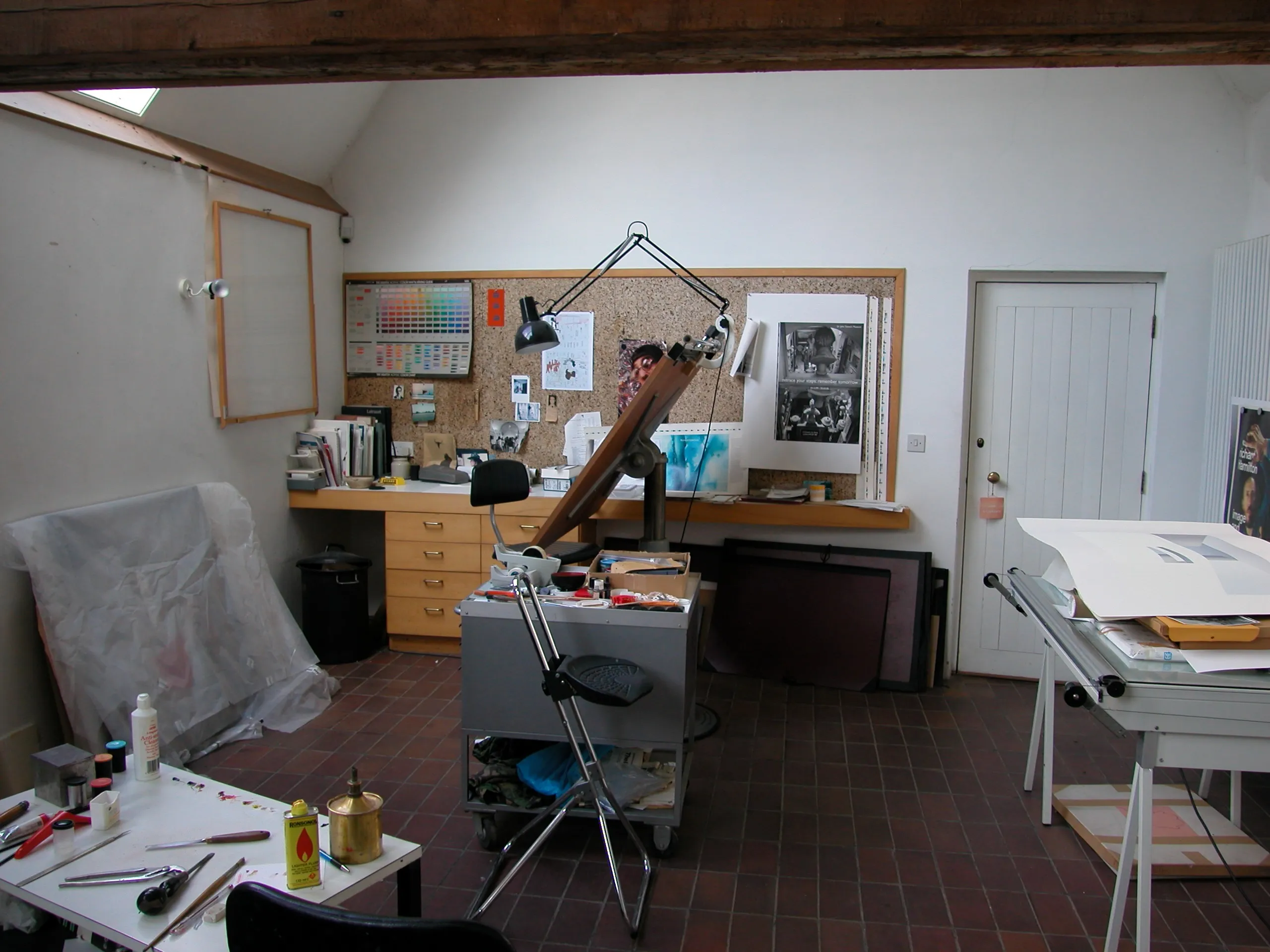
A friendship and collaboration that began in 1980 at Hamilton’s home in Northend — word processors and hand-built cables, cataloguing and precision, and, resolved on his drawing board, the DIAB computer: an object designed by an artist, now in the collection of MoMA.
Design objects and information systems for museums and major exhibitions.
Founder of Republic Internet AB, one of Sweden’s first internet companies. Among its landmark projects: in 1998, taking Stockholms Auktionsverk — the world’s oldest auction house, founded in 1674 — online with its first live internet auction.
Professional art inventory for Apple devices — the natural result of decades working with art documentation, provenance and exhibitions.
A private iPhone application built around privacy, clarity and on-device intelligence — technology made to serve people.
Art & Writing
On new work by Sir Peter Blake, shown at Wetterling Gallery as the latest chapter in a dialogue between artist and gallery spanning more than four decades — from the intimate “Girl with a Disney Tattoo” portraits to the Hogarth and archive collages of an artist, in his tenth decade, still cutting, painting and playing.
On Markus Lüpertz’s exhibition Zwielicht — myth not as historical quotation but as a living pictorial structure — read across three paintings (Das Warten, Rote Schnecke, Zwielicht), the fragmented Herkules bronzes and a group of works on paper by one of Germany’s foremost post-war artists. English translation, with the Swedish original.
An iconography of the Ukrainian-Swedish artist Nathalia Edenmont — how a post-Soviet youth of loss and disillusionment became the grammar of a body of work that fuses classical beauty with decay, and how, in the recent Out of Body series, she has turned from ephemeral photography to permanent marble, culminating in a three-metre Carrara egg. Final revision, July 2026.
An illustrated monograph on the sculptor Tony Cragg (b. 1949) in three parts — the evolution of his forms from 1970s scavenged geometry to today’s lyrical steel, the fabrication methods behind them, and a career timeline that straddles Britain and Germany. Seventeen photographs by the author. Revised with sources, August 2026.
On the occasion of Larry Poons’s first major exhibition in Sweden, a catalogue essay tracing six decades of restless reinvention — from the optical dot paintings of the 1960s, through the poured and thrown “elephant skin” canvases of the 1970s, to the liberated recent work on show at Wetterling Gallery.
The book
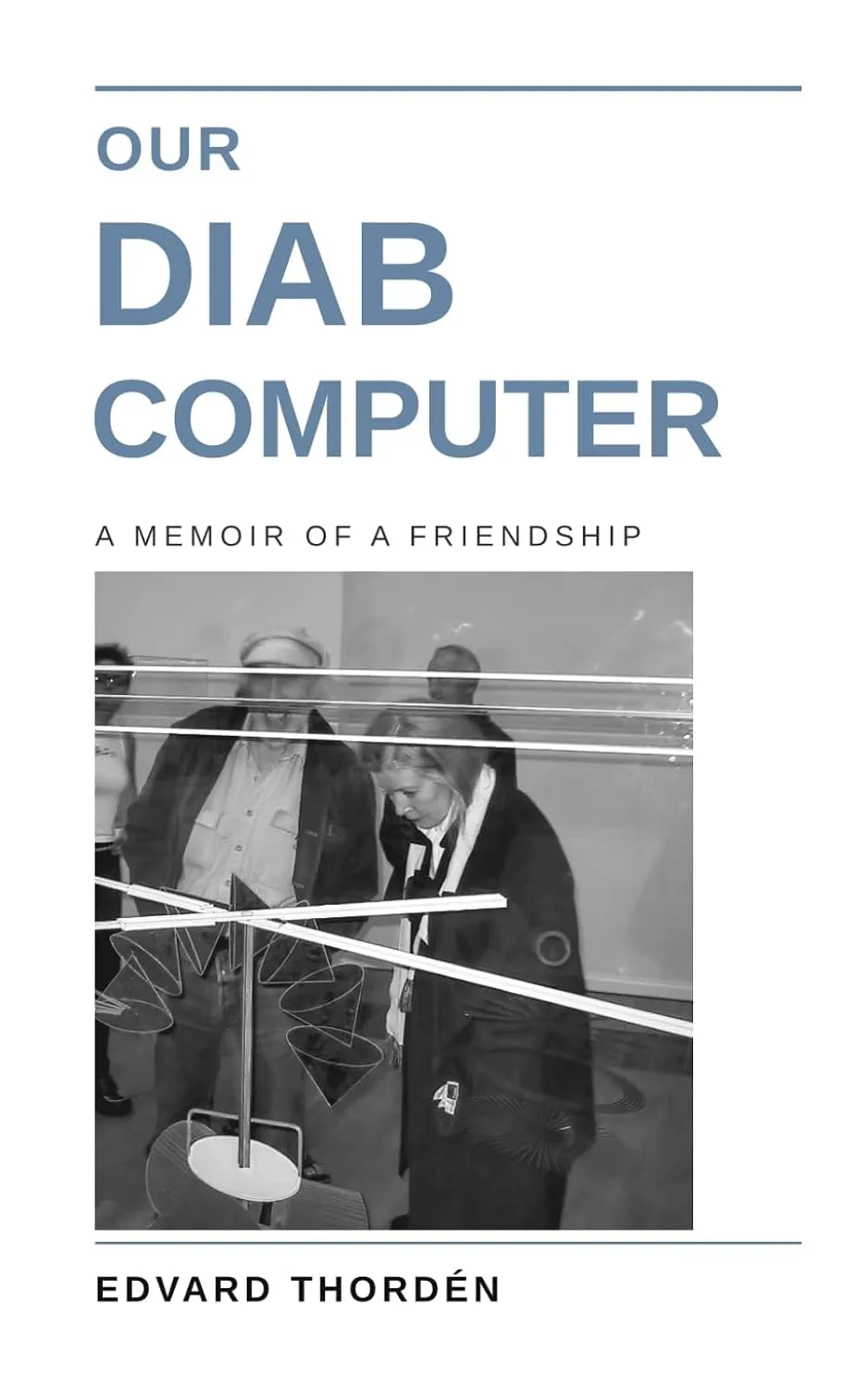
How one of the twentieth century’s most exacting artists came to design a computer — a memoir of art, Unix, food and friendship, and of what happens when a great artist refuses to accept that an industrial object should be ugly.
About
My work has always been about caring for information that matters. Over decades of working with art inventories, galleries, exhibitions, provenance, and Richard Hamilton’s archive, I learned how careful documentation can preserve not only facts, but relationships, meaning, and cultural memory.
Today, I bring that same care to designing private applications for Apple devices. Whether I am helping someone document an artwork or prepare for a healthcare visit, my aim is simple: to make technology feel calm, useful, and human — and to ensure it serves people and culture, never the other way around.
Read the full story →I welcome conversations with museums, galleries, researchers, publishers, developers and people working where culture and technology meet.
Start a conversation