Monograph
Tony Cragg: Iconography, Method and Milestones
An illustrated monograph on the sculptor Tony Cragg (b. 1949) in three parts — the evolution of his forms from 1970s scavenged geometry to today’s lyrical steel, the fabrication methods behind them, and a career timeline that straddles Britain and Germany. Seventeen photographs by the author. Revised with sources, August 2026.
Tony Cragg (b. 1949) stands as one of the most influential and endlessly inquisitive sculptors of the post-war era. Initially trained as a laboratory technician, his artistic practice has bypassed standard artistic dogma in favour of an ongoing, quasi-scientific interrogation of the physical universe. Rejecting traditional notions of fixed form and surface decoration, Cragg views sculpture as a non-utilitarian vessel for exploring how matter shapes human perception, thought, and culture. This monograph traces three strands of that practice in turn: the evolution of his forms, the methods by which he makes them, and the milestones of a career that straddles Britain and Germany.
“I’m made of material, you’re made of material, the room’s made of material, and I don’t know of anything else other than material. … Even intelligence is a phenomenon of material; even love is a phenomenon of material.” — Tony Cragg, in conversation at Lisson Gallery, London, 2025
Part One — The Evolution of an Iconography
1. The 1970s: Post-Industrial Scavenging and Geometry
Trained in London through the 1970s — at Wimbledon School of Art from 1970 and the Royal College of Art from 1973 — Cragg came to prominence around 1980 among the sculptors later grouped under the label “New British Sculpture.” His early conceptual practice has often been read as a counterpoint to the minimal and land-art interventions of the previous generation: instead of manipulating natural landscapes, Cragg mined the detritus of urban environments, focusing on fragments of discarded domestic and building rubble.
His foundational methodology during this decade revolved around constraint and containment — systematically packing loose debris into perfect geometric forms. This early period investigated stratification, containment, and spatial limits by forcing discarded macro-materials to act as uniform structural layers.
Plate — Stack (1975). Mixed found materials — wood, concrete, brick, metal, plastic, textile, cardboard and paper — layered and packed into a perfect, uniform geometric cube. (Image not reproduced; see the note on the illustrations.)
2. The 1980s: The Plastic Mosaic and Socio-Political Taxonomy
Following his relocation to Wuppertal, Germany, in 1977, Cragg expanded his scavenging to include a defining synthetic medium of late 20th-century consumerism: mass-produced, multi-coloured plastics. Throughout the 1980s, Cragg meticulously sorted these fragments by hue, assembling them flat against gallery walls and floors to construct large-scale, recognisable figurative reliefs.
These works functioned on dual registers: structurally, they explored the relationship between micro-particles and macro-silhouettes; conceptually, they have often been read as critiques of industrial hyper-production and of Britain’s political condition in the Thatcher era — a reading that belongs to the critical literature rather than to any stated intention of the artist’s.
Plate — Britain Seen from the North (1981). Plastic and other found materials on the wall — an iconic relief mapping out Great Britain, turned on its side, scrutinised by a solitary figure. (Image not reproduced; see the note on the illustrations.)
By the closing years of the 1980s, Cragg pushed his stacking vocabulary into the vertical dimension, assembling towers from found and recycled materials — scrap metal, machine parts, rubber, stone, and wood — to create monumental, quasi-architectural spires. His decisive turn from found objects toward fabricated and cast materials would come in the following decade.
Plate — Minster (1987). Stacked found and recycled materials — scrap metal, machine parts, rubber, stone and wood — rising into towering, industrial architectural spires. (Image not reproduced; see the note on the illustrations.)
3. The 1990s: Fabrication, Distortion, and Hidden Kinetics
The 1990s brought a decisive operational shift: Cragg largely turned from found objects toward fabrication from raw materials — a movement away from the readymade that was gradual rather than absolute. This period birthed two parallel, ongoing investigations into the fluidity of solid mass: Early Forms and Rational Beings.
Early Forms. This path focused on mutating traditional, utilitarian containers — such as laboratory flasks, test tubes, and ancient vessels. Cragg mathematically stretched, twisted, and folded their boundaries along horizontal planes, turning rigid vessels into anatomical, skin-like topologies.
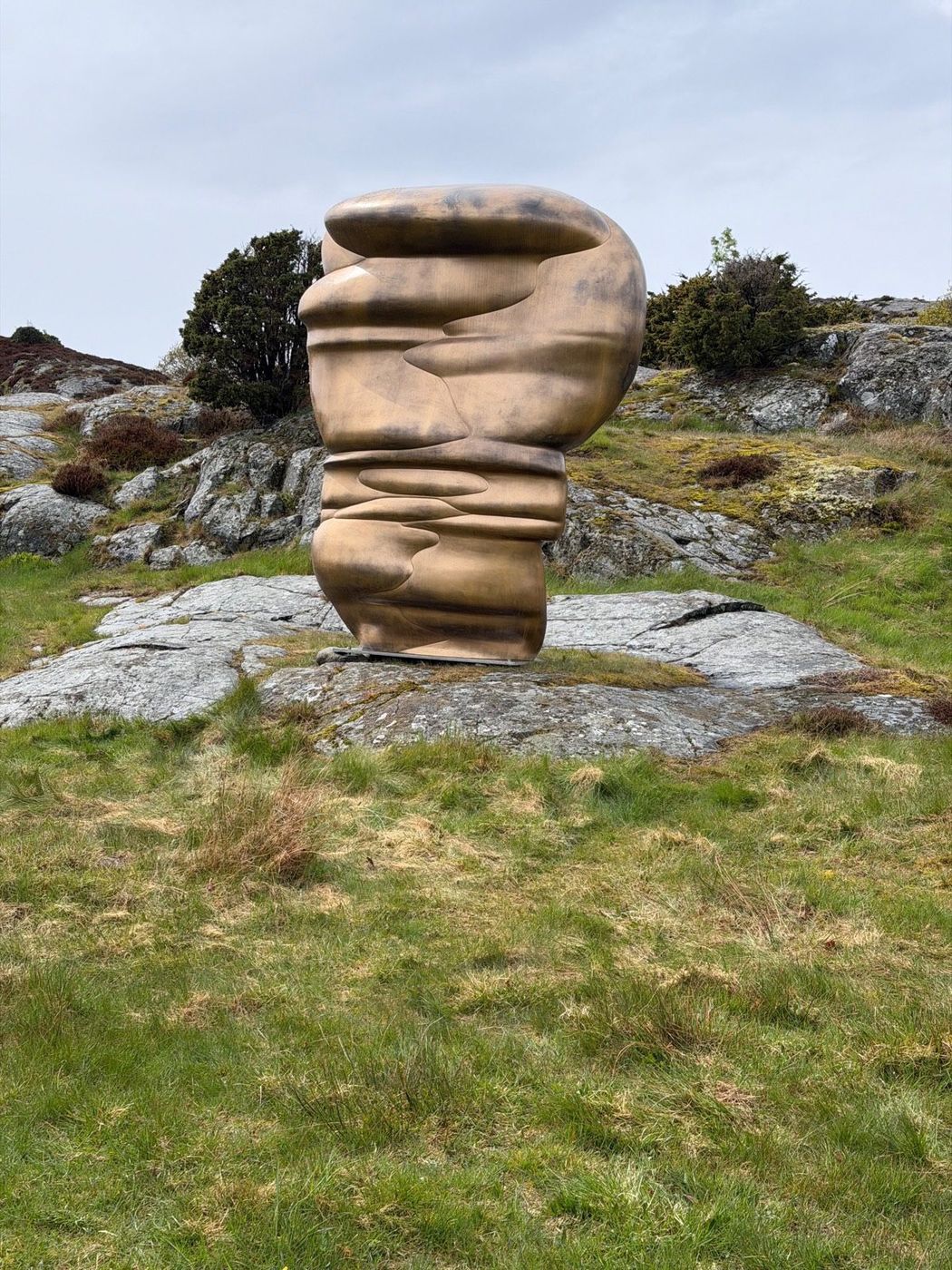
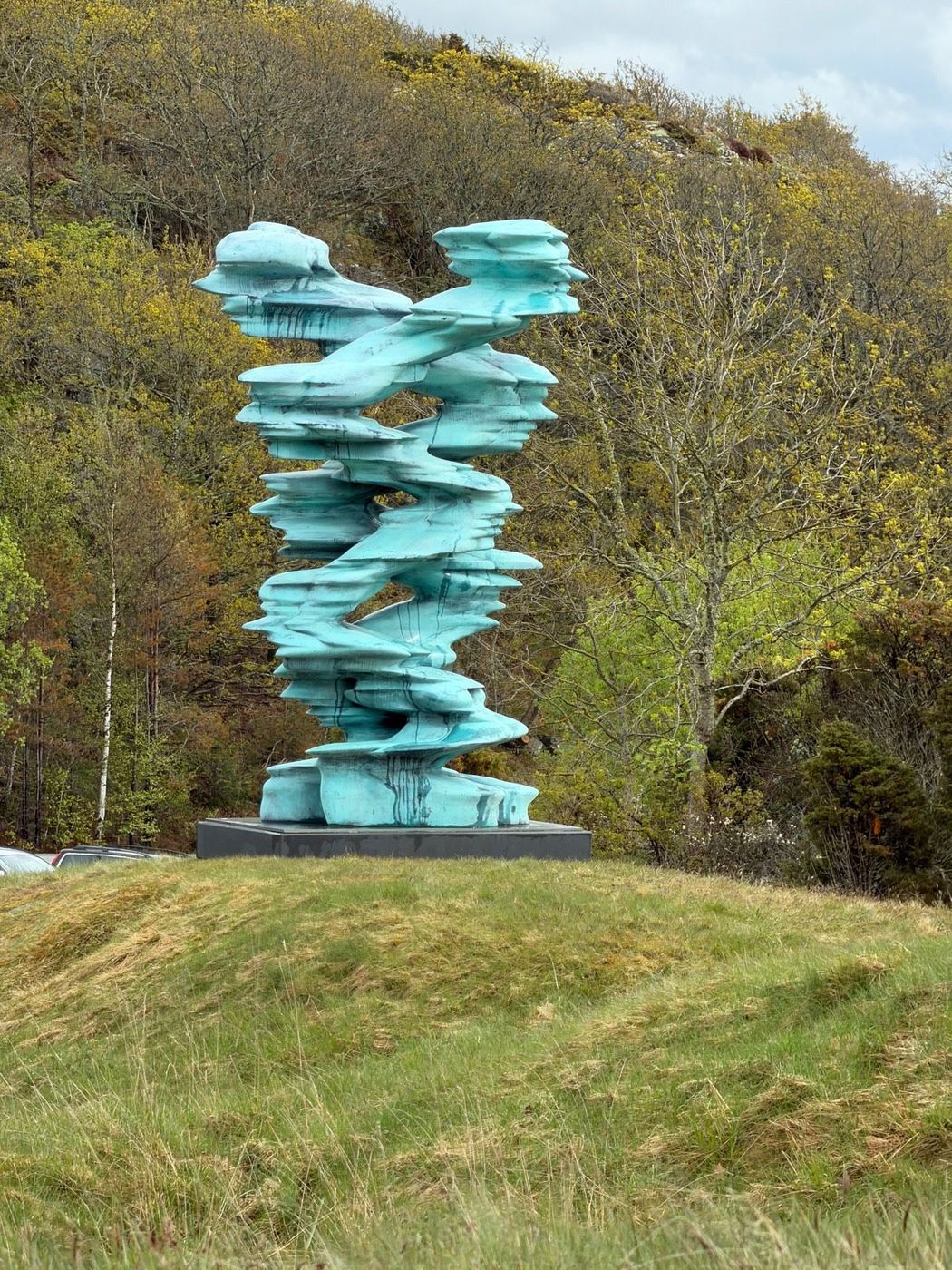
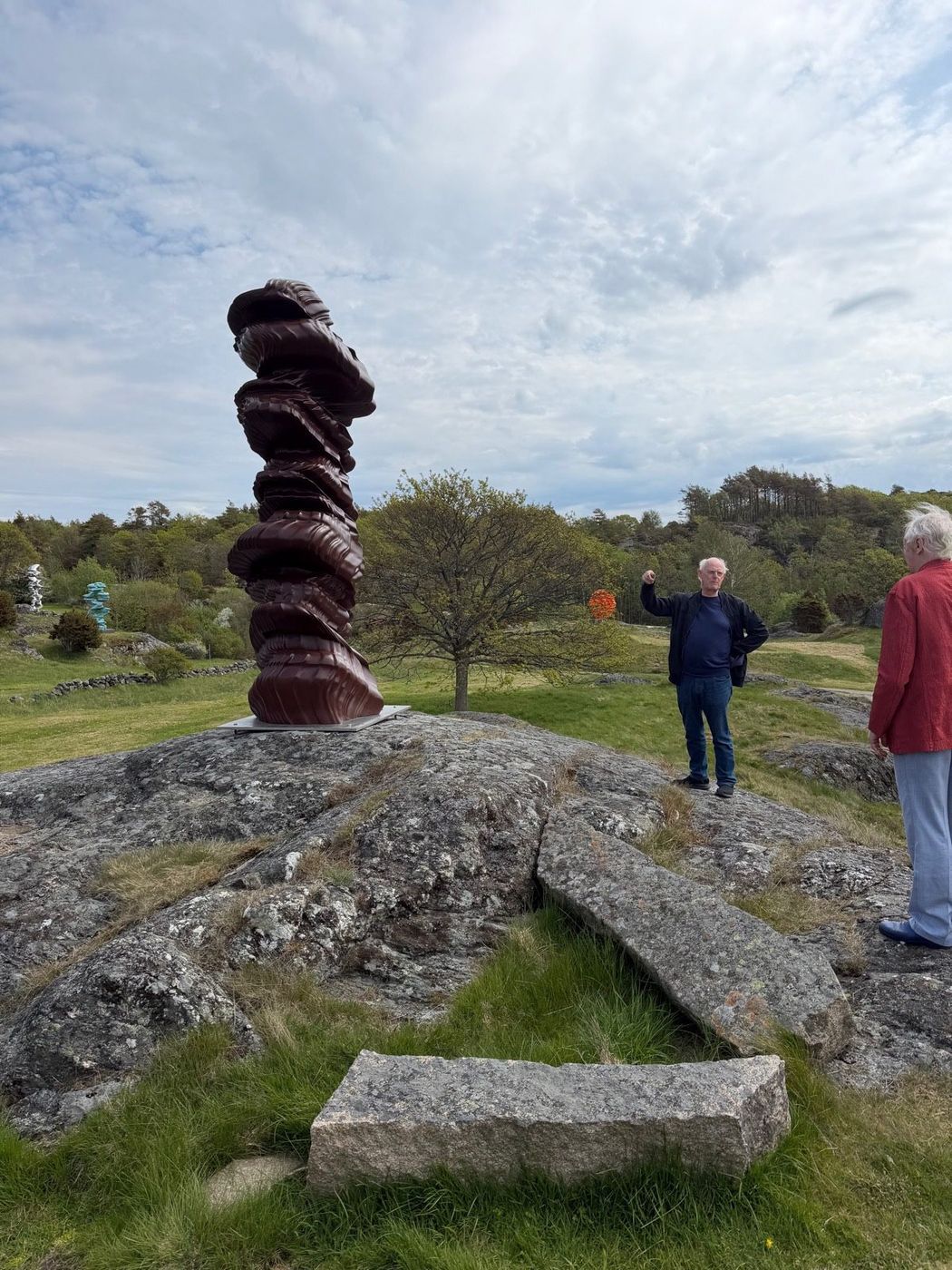
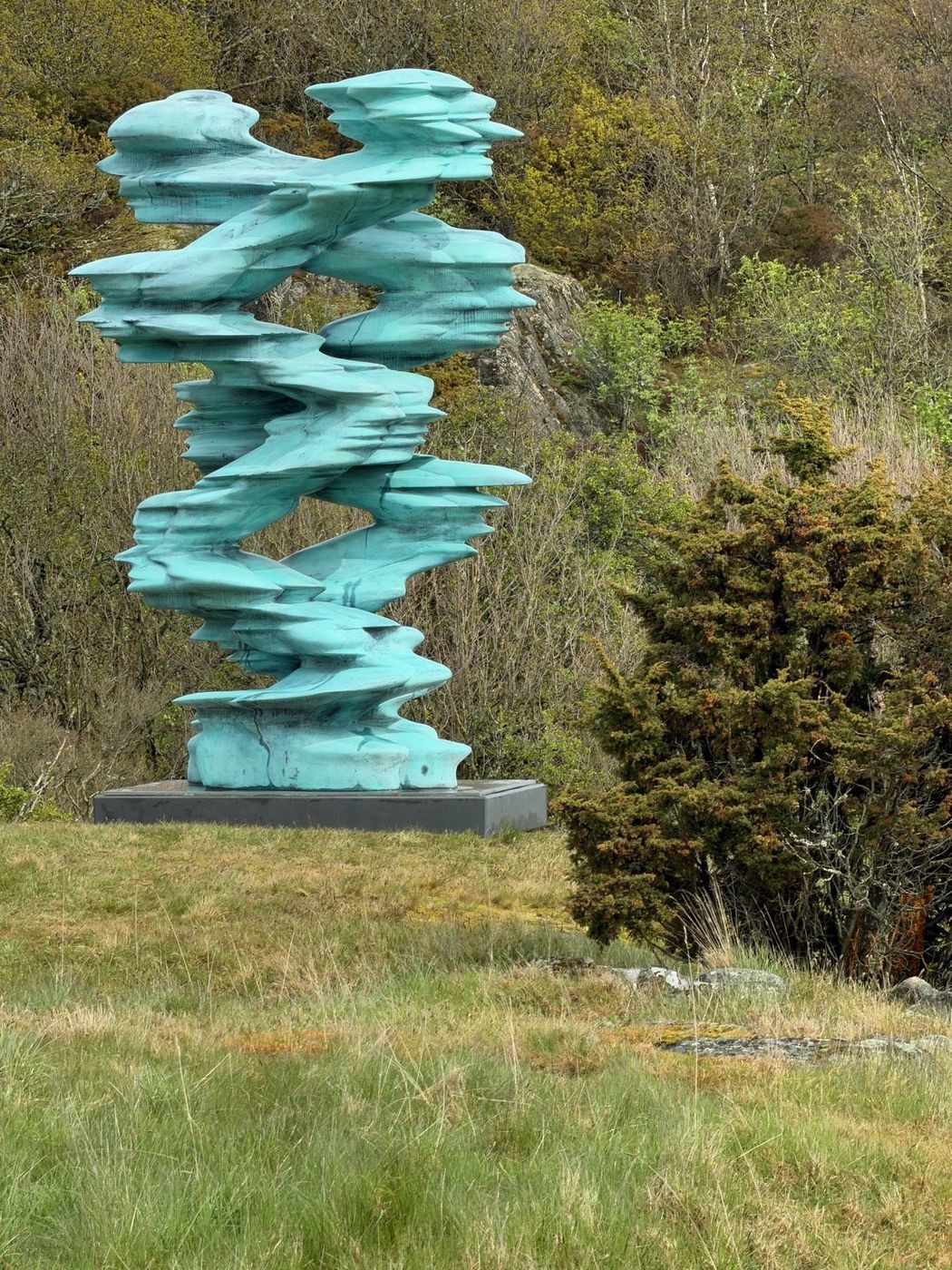
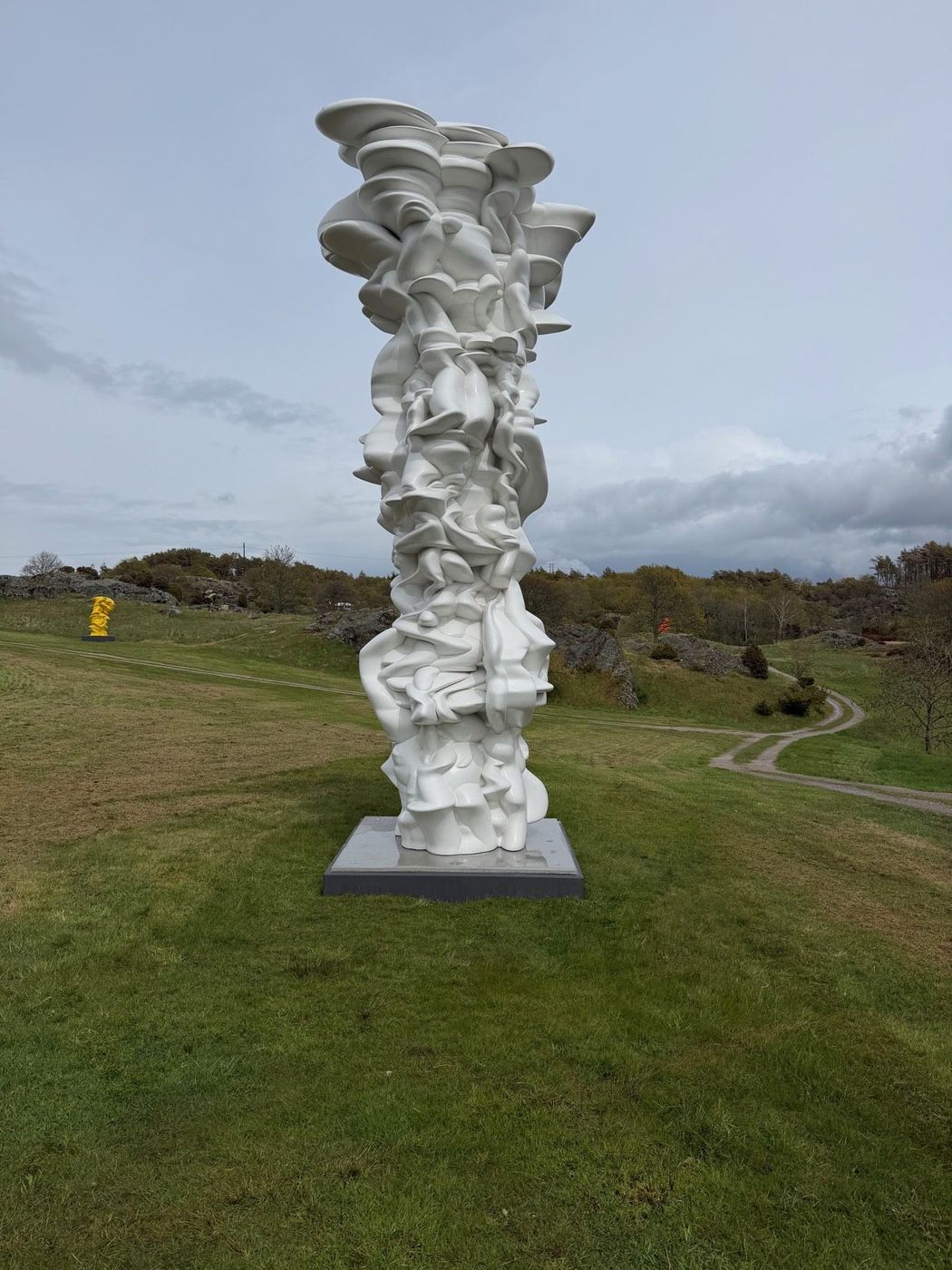
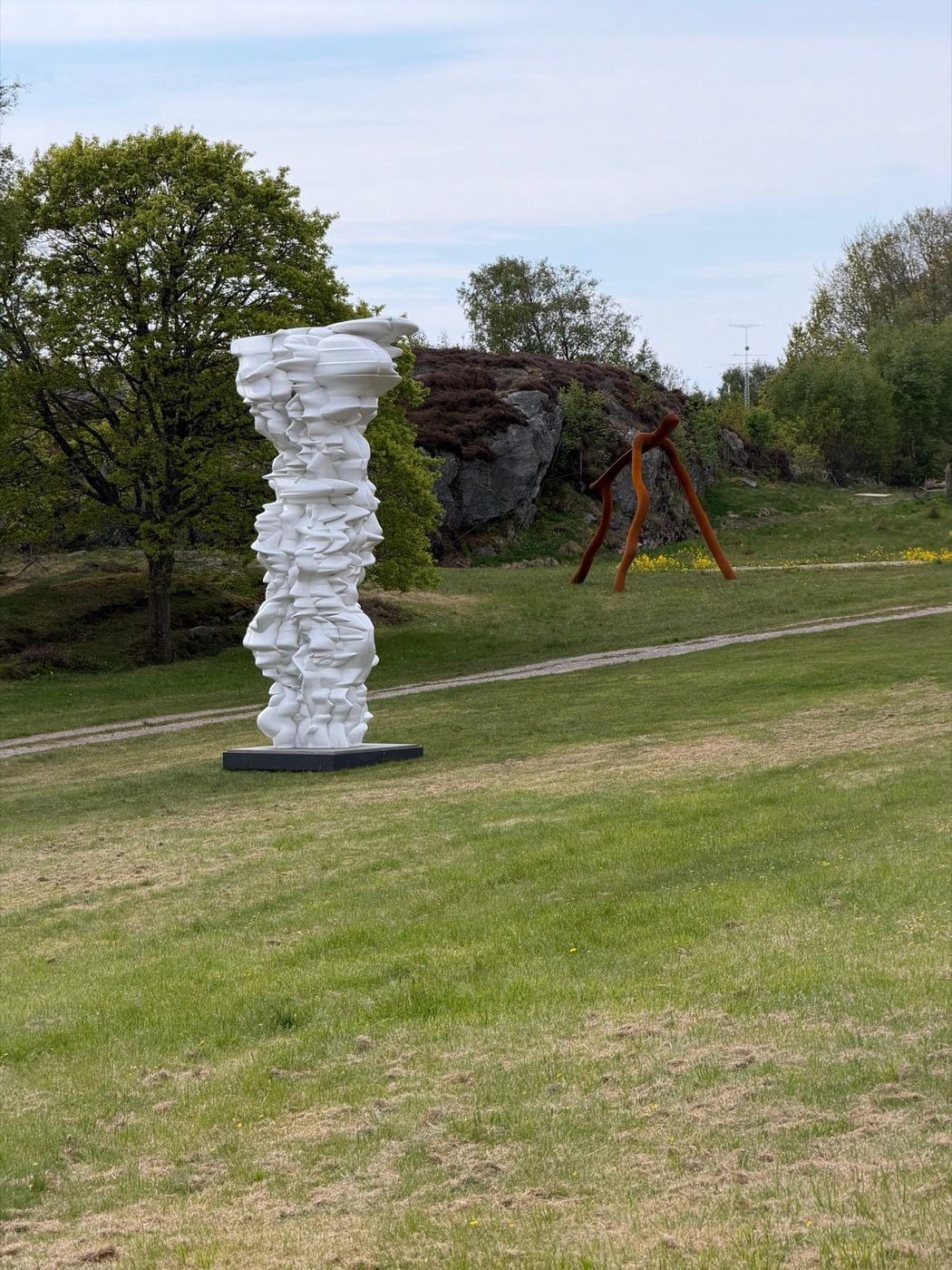
Rational Beings. Working vertically, Cragg stacked asymmetrical circular or elliptical discs along a central axis. While presenting an initial impression of abstract geological columns, the undulating contours dynamically resolve into fleeting human profiles and faces as the viewer circles the physical work.
4. The 2000s and 2010s: Micro-Biology and Fluid Dynamics
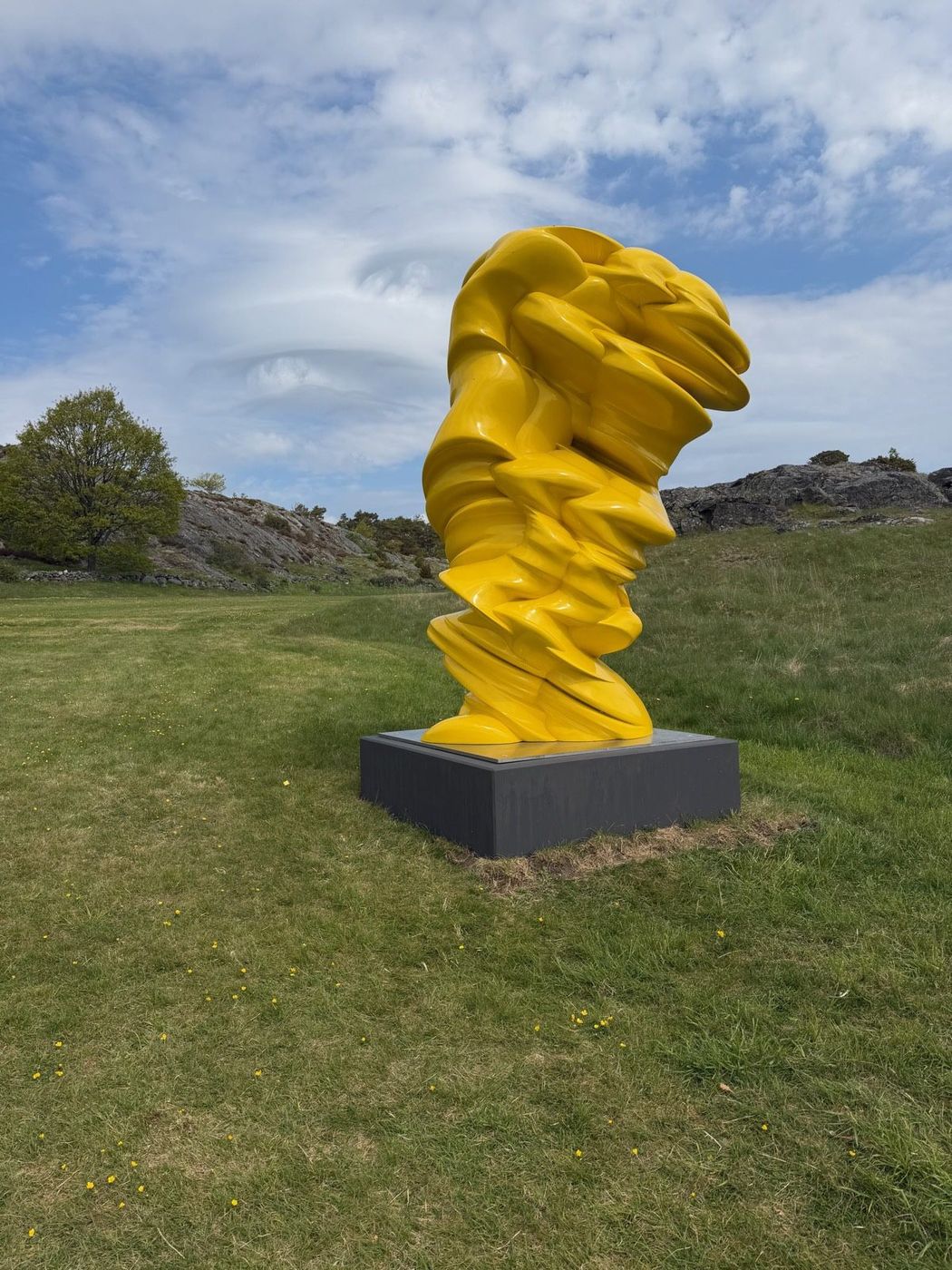
With the dawn of the 21st century and accessibility to high-performance composites, Cragg focused deeply on fluid dynamics, biological microstructures, and molecular interconnectedness. His surfaces transitioned from heavy industrial layering to shimmering, organic, cellular skins.
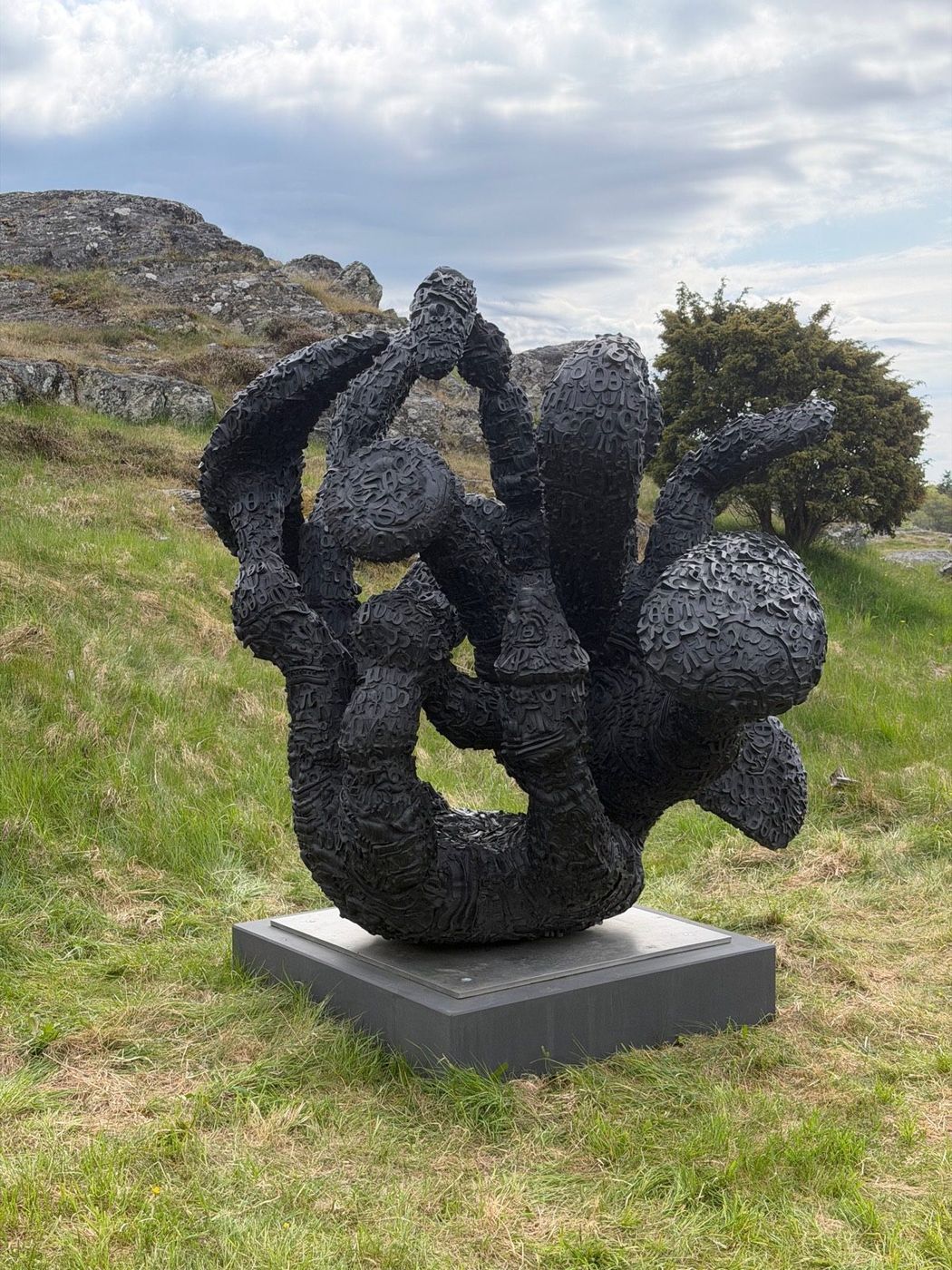
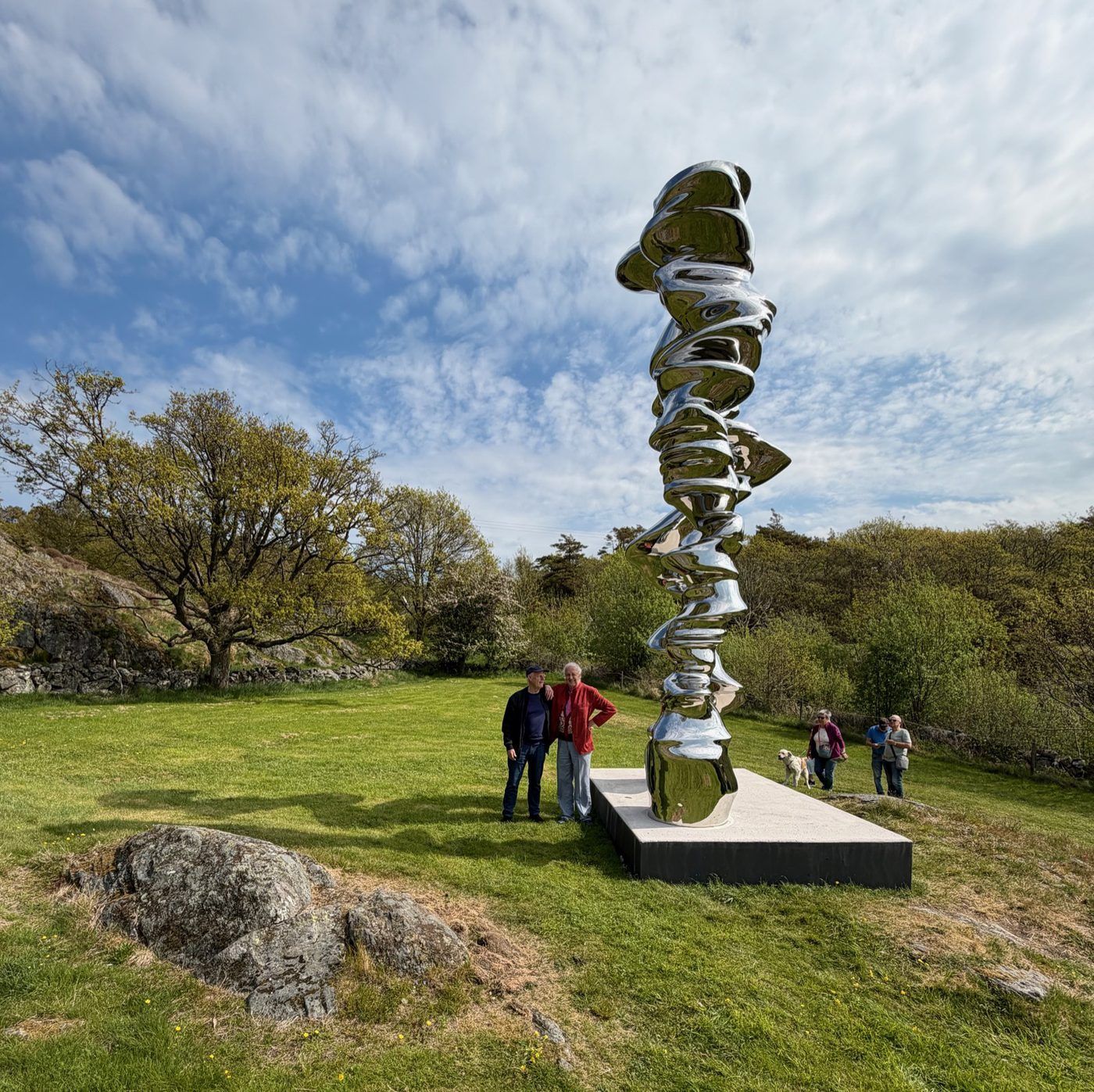
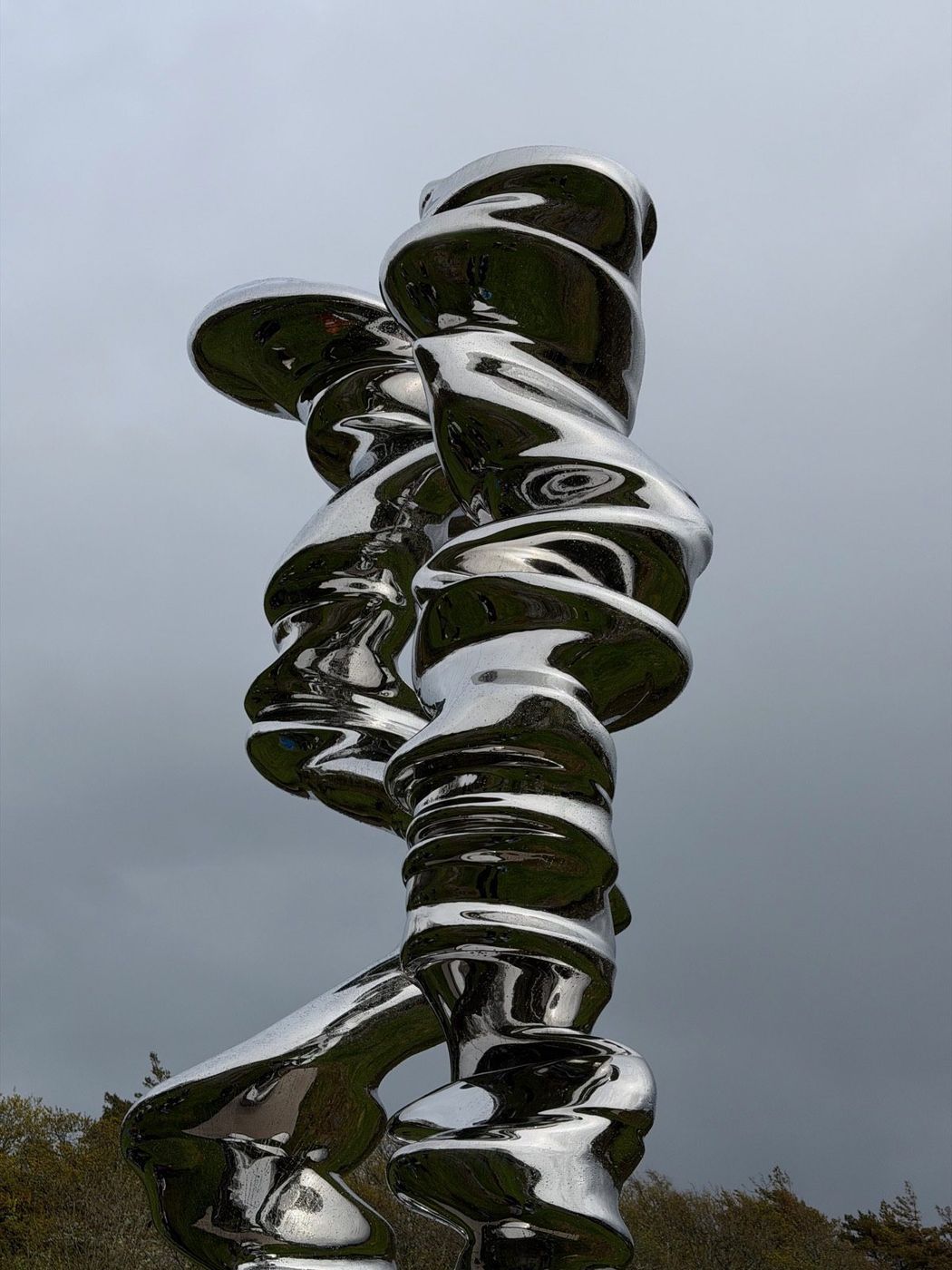
In his Secretions series, large biomorphic forms were encased in thousands of uniform consumer objects like dice or beads, confusing the boundary between the internal macro-structure and external environment. Concurrently, his outdoor works in mirror-polished stainless steel and stratified bronze pushed fluid dynamics to capture the kinetics of natural phenomena — resembling tornadoes, shifting tectonic plates, or highly magnified DNA strands caught mid-motion.
5. The 2020s to Today: Tense Materiality and Lyrical Steel
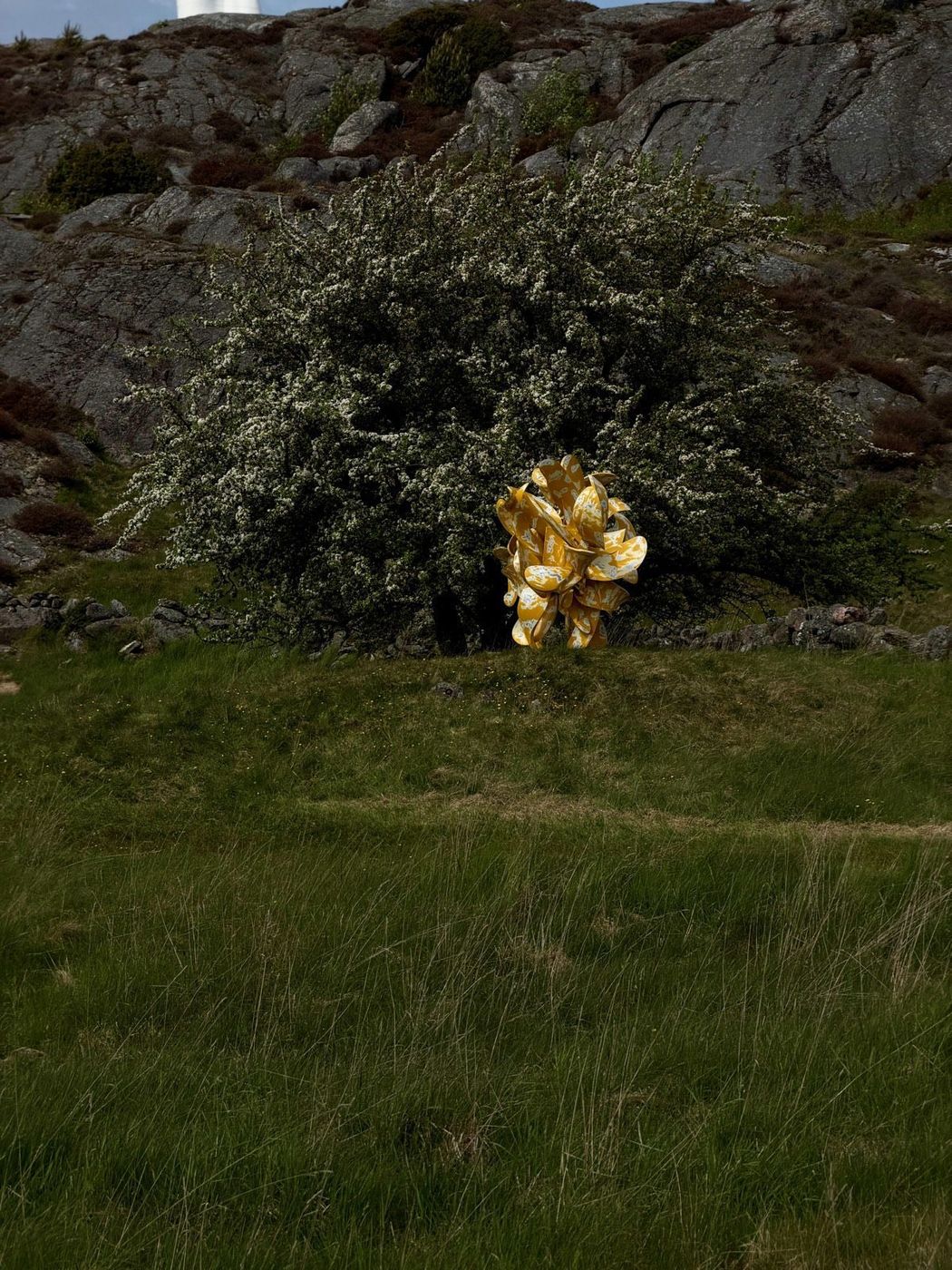
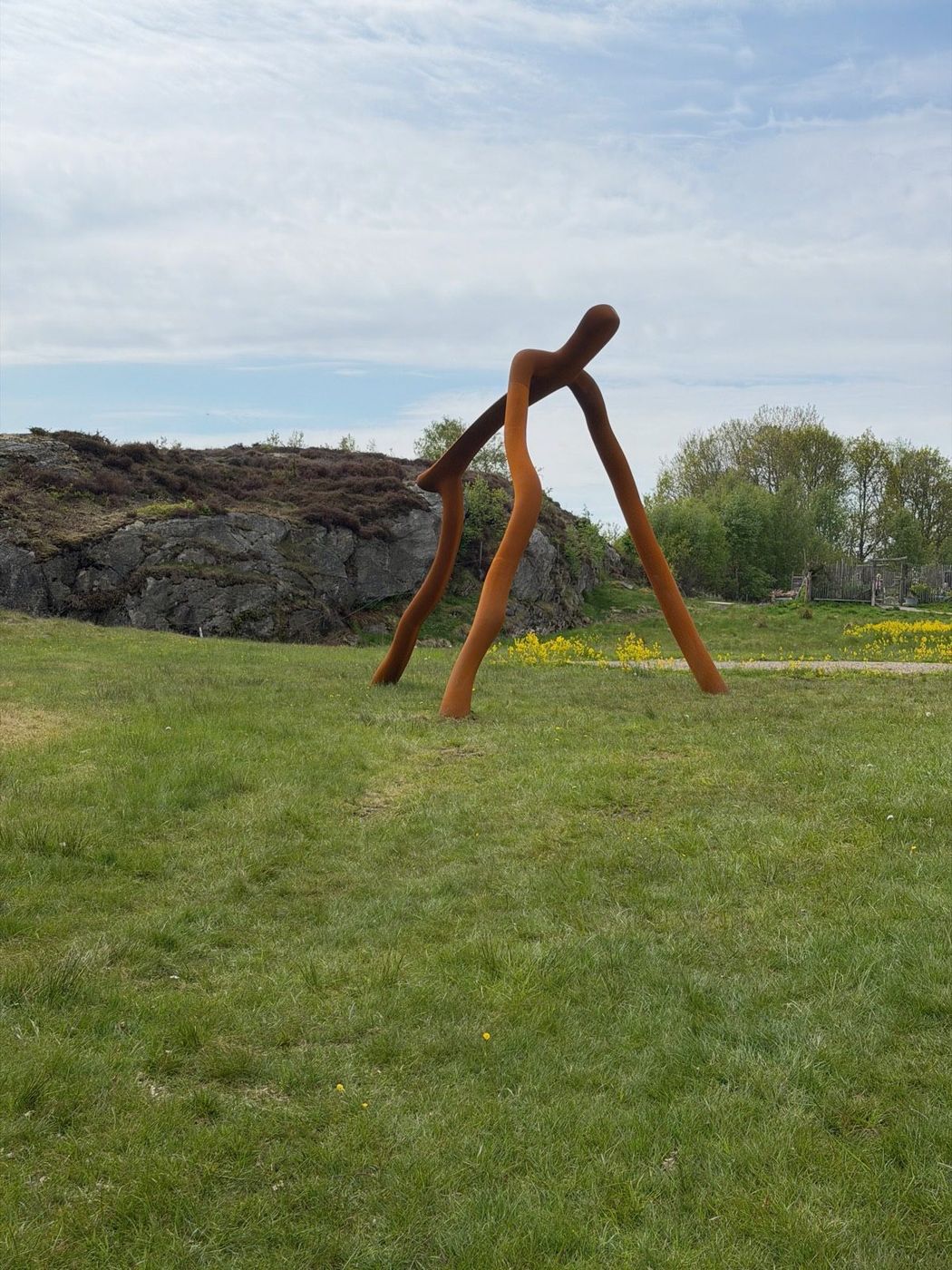
Cragg’s current work — exemplified by his 2025–26 solo exhibition at Lisson Gallery, London — manifests a profound dialogue with heavy industry and gravitational resistance. Focusing on concurrent lines of inquiry entitled Incident, Path, and Stand, Cragg confronts the physical limits of heavy metals like Corten and stainless steel.
In a December 2025 interview with Paul Carey-Kent for Artlyst, Cragg framed these works against the constructive tradition of steel sculpture — the lineage of Tatlin, Caro, Chillida, and di Suvero, in which steel has been treated as a geometric, “industrially-formatted” material. Cragg’s stated ambition reverses that paradigm: he wants steel to look “fluid… more natural than industrial,” achieving “poise, balance, a kind of internal dynamic” by stressing the dense, rigid material into organic, lyrical, dancing forms. His process begins by precisely carving lightweight polyurethane, transferring that initial lightness, balance, and poise directly into cast industrial steel.
Part Two — Manufacturing and Fabrication Methods
If the evolution of Cragg’s forms tells one story, his methods tell another that runs in parallel. Across five decades he has moved from arranging material he found to authoring material he makes — and the techniques have changed with the ambition.
6. The Assembly Years (1970s)
Cragg’s earliest works rely on elementary operations — stacking, splitting, crushing, and sorting. Stack (1975) compresses layers of wood, concrete, paper, metal, glass and plastic into a roughly two-metre cube, each stratum retaining its own identity. The floor and wall pieces are essentially curatorial: in New Stones – Newton’s Tones (1978) he gathered coloured plastic fragments near Wuppertal and laid them out across the floor following Newton’s spectral sequence, from dark red through to violet. The wall reliefs of c. 1980–81, such as Britain Seen from the North, apply the same principle of sorting and arrangement to build a figurative image from hundreds of shards. The “technique” here is less fabrication than organisation.
7. Drawing, Models and Profiles
The shift to fabrication is built on a chain that begins with drawing. Cragg draws constantly, and has likened his sculptural process itself to “drawing in space, in three dimensions.” Yet he insists the outcome is decided at the bench, not on paper — “I don’t plan the thing. The thing is to make it in the studio.” His central device is the stacking of sections and the sweeping of profiles. For the Rational Beings series he stacks elliptical discs — often cut from plywood — along two axes, one straight and one bent, so that the superimposed sections generate a continuous skin in which human faces surface and dissolve as the viewer moves around the work. In Early Forms he takes familiar vessels and stretches, twists, and hollows them by hand, building up and carving back until the object becomes an autonomous volume.
8. Materials and Casting
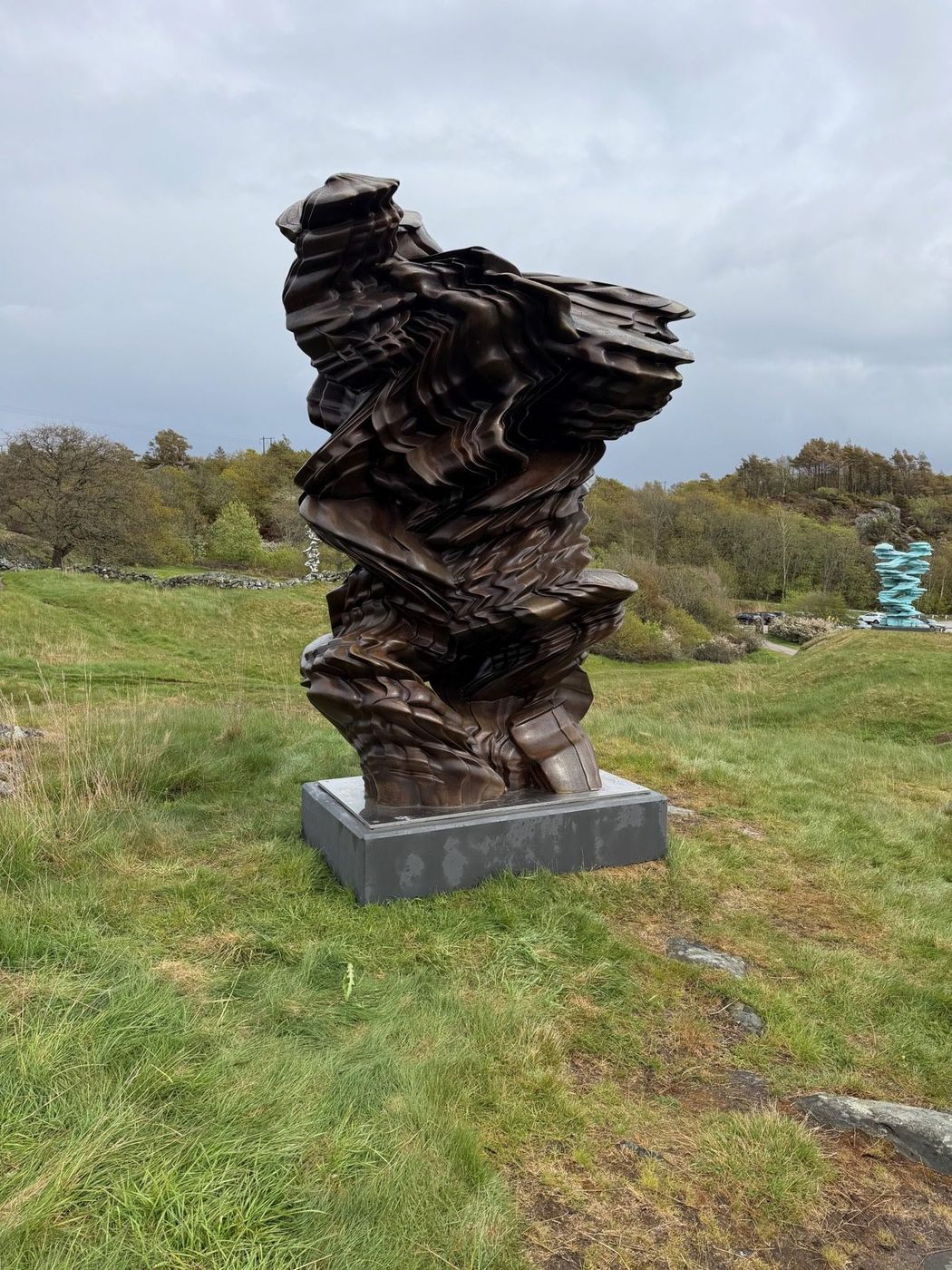
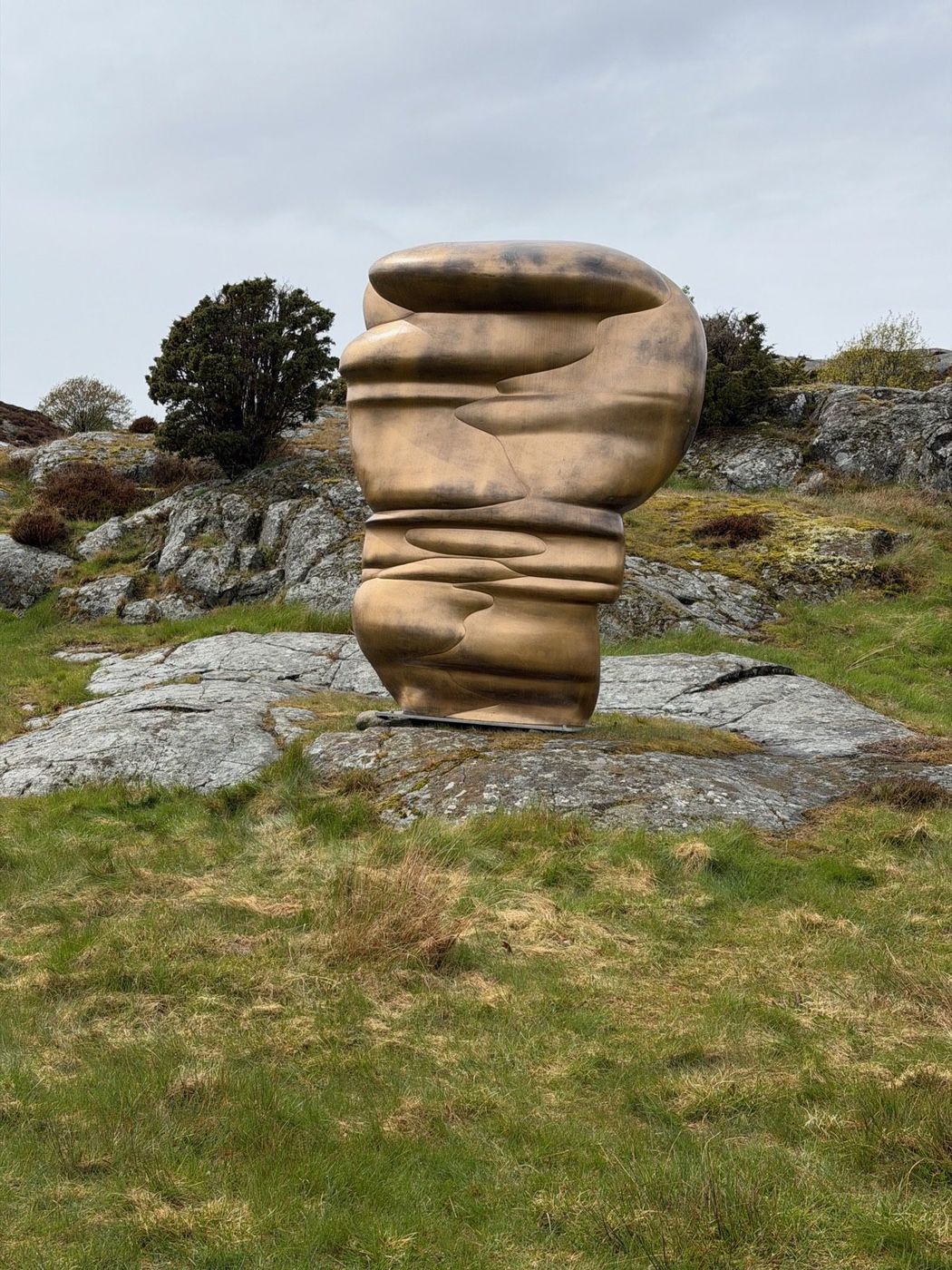
Few sculptors have worked across so wide a material range: wood, plaster, stone, glass, fibreglass, Kevlar, cast iron, bronze, stainless steel and weathering (Corten) steel. Bronze is cast by traditional lost-wax methods and then patinated — the verdigris greens and oxblood reds seen throughout these photographs are chemically induced surfaces, not paint. Stainless steel is fabricated and welded, then worked to a mirror polish so reflective that the mass appears to dissolve into the sky and landscape around it. Corten is welded and left to weather. Cragg has said he wants steel — historically an “industrially-formatted” material — to look instead “fluid… more natural than industrial,” achieving “poise, balance, a kind of internal dynamic” by stressing it. Wood is laminated and stacked in thin layers, then machined. Throughout, the works are produced by hand, by teams of artisans working over extended periods.
9. Scanning, Milling and the Role of the Computer
Cragg is precise about where digital tools enter the process: “I use technology in the manufacturing, not the design — computers are involved in the scanning to create a digital mould.” A hand-made model is 3D-scanned, scaled and cleaned up digitally, then milled by CNC machine from blocks of high-density foam or polyurethane before artisans finish the surface. The layered passes of the milling cutter, as it happens, echo the laminated-plywood method he developed in the 1990s. The decisions remain the artist’s; the machine only enlarges and repeats.
10. The Studio and the Current Process
The studio is a complex of workshops in Wuppertal, where Cragg has lived since 1977, including what he has called a “private domain” simply to sit in, draw in, and model in, alongside the fabrication spaces where a team of assistants works. His most recent process, described around the 2025 Lisson Gallery exhibition, returns to carving: he cuts the form by hand from polyurethane — “a soft yet firm material that can be carved very accurately” — with no fixed plan, then has it scaled up, moulded, and cast into patinated bronze, reflective stainless steel, or Corten. The recent series carry the titles Incident, Path, and Stand. “Without material,” he says, “there is nothing.”
Part Three — Milestones: A Career in Material
Born in Liverpool and resident in Germany for almost half a century, Cragg has built a career that straddles two countries and two roles — internationally exhibited sculptor and influential teacher. The chronology below gathers the turning points; the lists that follow summarise the principal honours and exhibitions.
11. A Career Timeline
- 1949 — Born 9 April in Liverpool, England.
- 1966–68 — Works as a laboratory technician at the Rubber Producers’ Research Association; begins drawing, which leads him toward art.
- 1968–77 — Studies art: Gloucestershire College of Art, then a BA at Wimbledon School of Art (1970–73) and an MA in sculpture at the Royal College of Art (1973–77).
- 1977 — Moves to Wuppertal, Germany, where he still lives and works.
- c. 1978–79 — Begins teaching at the Kunstakademie Düsseldorf (sources differ on the exact year).
- 1982 & 1987 — Exhibits at documenta 7 and documenta 8, Kassel.
- 1988 — Represents Britain at the Venice Biennale, wins the Turner Prize, and is appointed Professor at the Kunstakademie Düsseldorf.
- 1994 — Elected a Royal Academician (RA), London.
- 2002 — Appointed CBE for services to art; elected to the Akademie der Künste, Berlin.
- 2006 — Acquires the derelict Waldfrieden estate in Wuppertal-Barmen.
- 2007 — Awarded the Praemium Imperiale for Sculpture (Japan Art Association).
- 2008 — Skulpturenpark Waldfrieden opens to the public, run by the non-profit Cragg Foundation.
- 2009–13 — Serves as Rector of the Kunstakademie Düsseldorf.
- 2011 — Solo exhibition at the Musée du Louvre, Paris.
- 2012 — Awarded the Grand Cross of the Order of Merit of the Federal Republic of Germany.
- 2016 — Knighted (Knight Bachelor) for services to the visual arts and UK–German relations — becomes Sir Tony Cragg.
- 2017 — Major UK survey, A Rare Category of Objects, at Yorkshire Sculpture Park.
- 2024–25 — Retrospective at the Museo Nazionale Romano (Terme di Diocleziano), Rome.
- 2025–26 — Solo exhibition at Lisson Gallery, London, with a concurrent presentation at Skulpturenpark Waldfrieden.
- 2026 — Named a recipient of the European Culture Prize (Europäischer Kulturpreis).
12. Selected Honours and Awards
- 1988 — Turner Prize, Tate Gallery, London
- 1992 — Chevalier des Arts et des Lettres, France
- 1994 — Elected Royal Academician (RA)
- 2001 — Shakespeare Prize, Alfred Toepfer Foundation, Hamburg
- 2002 — CBE (Commander of the Order of the British Empire)
- 2007 — Praemium Imperiale for Sculpture
- 2012 — Grand Cross, Order of Merit of the Federal Republic of Germany
- 2016 — Knight Bachelor (knighthood)
- 2018 — Order of Merit of North Rhine-Westphalia
- 2026 — European Culture Prize (Europäischer Kulturpreis)
13. Selected Exhibitions
- 1982 & 1987 — documenta 7 & 8, Kassel
- 1988 — Venice Biennale, British Pavilion (representing Britain)
- 1996 — Whitechapel Art Gallery, London
- 2011 — Musée du Louvre, Paris
- 2016 — State Hermitage Museum, St Petersburg
- 2017 — Yorkshire Sculpture Park, A Rare Category of Objects
- 2021 — Houghton Hall and Gardens, Norfolk
- 2024–25 — Terme di Diocleziano (Museo Nazionale Romano), Rome
- 2025–26 — Lisson Gallery, London
14. Skulpturenpark Waldfrieden
In 2006 Cragg bought the abandoned Waldfrieden estate in Wuppertal-Barmen; two years later, run by the non-profit Cragg Foundation, it opened as the Skulpturenpark Waldfrieden — a permanent park of roughly fourteen hectares that shows his own work alongside that of other sculptors and supports art research and publishing. It is both a public venue and an extension of his studio thinking: sculpture set out-of-doors, in changing light and weather, exactly as in the photographs throughout this monograph.
Cragg’s evolution marks a shift from organising existing material debris to authoring new material dynamics. Taking seriously his own claim that even thought and feeling are phenomena of material, he approaches sculpture not as a search for predetermined decorative ideas, but as an open-ended, laboratory-like investigation into the untapped possibilities of the physical world.
A note on the illustrations
The reproduced photographs (Figures 4–17) are the author’s own, made from works by Tony Cragg — several of them installed out of doors. The three early works — Stack (1975), Britain Seen from the North (1981) and Minster (1987) — are described in the text but not reproduced here: the available images are professional photographs that would require a rights clearance and credit before publication. All works depicted are © Tony Cragg.
Select bibliography
- Celant, Germano. Tony Cragg. London: Thames & Hudson, 1996.
- Cragg Foundation (ed.). Anthony Cragg: Works on Paper I; Sculpture 1969–85; Sculpture 1986–2000; Sculpture 2000–2017. Cologne: Verlag der Buchhandlung Walther König, 2017–2019.
- Elliott, Patrick. Tony Cragg: Sculptures and Drawings. Exh. cat. Edinburgh: National Galleries of Scotland, 2011 (US ed. New Haven: Yale University Press).
- Finckh, Gerhard (ed.). Tony Cragg: Parts of the World. Retrospektive. Exh. cat. Wuppertal: Von der Heydt-Museum, 2016.
- Kelle, Christine (ed.). Tony Cragg: Micro – The Studio. Cologne: Verlag der Buchhandlung Walther König, 2019.
- Musée du Louvre, Département des Sculptures. Tony Cragg: Figure out figure in. Exh. cat. Paris, 2011.
- Pheby, Helen (ed.). Tony Cragg: A Rare Category of Objects. Exh. cat. Wakefield: Yorkshire Sculpture Park, 2017.
- Tony Cragg: Infinite forme e bellissime. Exh. cat. Rome: Museo Nazionale Romano, Terme di Diocleziano, 2024–25.
- Tate collection catalogue entries: Stack 1975 (T07428); Britain Seen from the North 1981 (T03347). Arts Council Collection: New Stones – Newton’s Tones 1978.
Quotations are drawn from Cragg’s interviews at Lisson Gallery (Whitehot Magazine, 2025), with Paul Carey-Kent (Artlyst, December 2025) and the Royal Academy (2017), and from the Lisson Gallery press release (2025–26).
— Edvard Thordén